FOODPORN

Everything You Ever Wanted to Know About Italian Sunday Sauce Gravy – But where Afraid to Ask

GIANNI of NORTH BEACH
Awesome SUNDAY GRAVY From a Great ITALIAN-AMERICAN COOK
GIANNI


Our Pal Gianni makes an awesome Sunday Gravy and we just love his passion. This recipe is for the Gravy that his Mom and Aunt Fran would make when Gianni was growing up in New Jersey where they make along with New York the Best Sunday Sauce Gravy to be found on the planet .. 


SUNDAY SAUCE alla CLEMENZA
From The GODFATHER


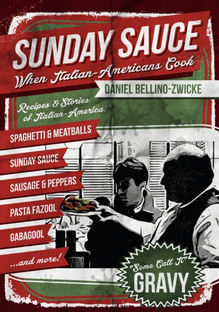
This Sunday Sauce video is from our friend Daniel Bellino, author of Sunday Sauce – 
When Italian-Americans Cook  … We love Daniel’s book, his Sunday Sauce (Gravy) recipe, and especially Daniel’s great passion and love for Italian-American food and the rituals within … Daniel just like our buddy Gianni is “The Real Deal,” and these guys are both Italian-Americans from Jersey, one of the strongest Italian enclaves in the country. Bravo Daniele ! Bravo Gianni !
CARLA’S SUNDAY GRAVY NAPOLITAN


Carla makes an Awesome Sunday Gravy .. 
She’s so Sweet, we just Love her. 
Her and her awesome Gravy Napolitan .. 

Brava Carla !!!


RAGU NAPOLITANA

The ORIGINAL SUNDAY SAUCE

The HISTORY of SUNDAY SAUCE GRAVY

RAGU NAPOLITAN


“THAT’S RIGHT, IT’S CALLED GRAVY” !!!

This girl just cracks us up .. And she’s from Jersey .. We swear, we didn’t plan this, but we realize most of the best Sunday Sauce gravy recipes come from New Jersey, more than anywhere else in the country, even Brooklyn and the rest of New York .. Well I guess Jersey Wins Top Prize for The Best SUNDAY GRAVY in All of America ..
2bf72-screen2bshot2b2014-05-012bat2b11-43-252bpm
LEARN How to Make SUNDAY SAUCE alla CLEMENZA


From THE GODFATHER


Cousin’s Antony & Daniel make an awesome SUNDAY SAUCE with Sausage, Meatballs. and Pork Spare Ribs .. We just love it .. Here they make this Gravy at Tony’s father’s house in Lodi, New Jersey which was at one time 100% Italian, mostly from Sicily and Napoli  .. Tony & Daniel’s grandfather and grandmother were from Lercara Friddi Sicily, the same town that one Charles “Lucky” Lucciano was from, as well as another Jersey Boy named one Francis Albert Sinatra (Frank Sinatra) …


Excerpted from SUNDAY SAUCE – When Italian-American Cook 
Of all the fine traditions of the Italian-American enclave in the United State, the Sunday afternoon ritual  of making  and eating a Sunday  Sauce, a.k.a. “Gravy” is Italian-America’s most Time-Honored of all. Mamma, Grandma (Nonna) will make her celebrated “Sunday Sauce” and all is glorious. Sunday Sauce? What is it? Well, first off, Sunday Sauce, or as some call it, Gravy or simply “Sauce,” is without question thee number-1 undisputed “Supreme Dish” of our great Italian-American Cuisine and the Italian-American enclave as a whole, “It doesn’t get any better than a Sunday Sauce.” Ok, now, to be more specific for those who may not know about Sunday Sauce, there are a number of variations on the theme. Most Sunday Sauces are made with Italian Sausages, Braciole, and Meatballs. Some people make their versions with; Beef or Pork Neck, while others make their Gravy (Sunday Sauce) with just Sausage and Meatballs, like Pete Clemenza, or the most popular version of; Sausages, Meatballs, and Braciole.  Some may throw some Chicken Thighs or a Veal Shank into this mix. Sunday Sauces can be made with any combination of these aforementioned meats. The meats are slowly simmered for several hours in a “Sauce” made with tomatoes, minced onions, and garlic. I generally like to make my Sunday Sauce Gravy with  Sausages, Meatballs, and Pork Ribs. Other times I’ll make it with Sausage, Meatballs, and Braciole.  An old tradition in some families is that mother or Grandma would start the Sauce early on a Sunday morning, get all the ingredients in the pot and start the Gravy simmering away for a couple hours on top of the stove, then put it in the oven for a couple hours while everyone goes to Church. When you get back home, the Sauce would be ready, “ready to be devoured that is!”
   Our family would usually start our Sunday meal with the most traditional Italian-American-Antipasto of roast  peppers,  Salami, Olives, Celery, and  Provolone.  After that, it’s on to the Main Event of Maccheroni and Sunday Sauce, a dish which is something so Blissfully and Pleasurably Sublime, that it is almost “Sinful.” Yes it is.
   When a meal centered around a Sunday Sauce is announced, one can have visions of Blissful Ecstasy at thoughts of eating Pasta laden with Italian Sausages, Savory Meatballs, Beef Braciola, and succulent Pork Ribs. All this has been slowly simmered to culinary perfection. Yes just the thoughts can enrapture one into a delightful frenzy of the “Most Blissful Feelings” of smelling, seeing, and consuming all the ingredients, the Sausages, Meatballs and Gravy. Yes a Sunday Sauce can and does have such effects on one’s mind, body,  and soul. And, I do not want to sound prejudice, but this is pure fact, it is the Male of the Italian-American species who Love The Sunday Sauce in all its form, far more than the female sex.  True! Meatballs too! And Italian-American men and boys Love and hold oh-so-dear, their Meatballs, Sunday Sauce, Sausage & Peppers,  and Meatball Parm Sandwiches.
Daniel Bellino-Zwicke   


SUNDAY SAUCE

alla BELLINO alla PACINO


NONNA BELLINO’S COOKBOOK

RECIPES From MY SICILIAN NONNA


DiANNE MAKES Her MEATBALLS

And SUNDAY GRAVY


SUNDAY GRAVY with MEATBALLS

One of the 1st SUNDAY GRAVY Recipes on Youtube 


SUNDAY SAUCE

alla CLEMENZA 

alla BELLINO alla PACINO


FLIGHTS & HOTELS 

WORLDWIDE


Did You Know the Philly Cheesesteak is an Italian-American Invention by Pat Olivieri 1933 Philadelphia PA

DID YOU KNOIW The PHILLY CHEESESTEAK is ITALIAN ???


.
PHILLY CHEESESTEAK
 
With PROVOLONE
 
MAKE at HOME !!!


PHILLY CHEESESTEAK – RECIPE

Ingredients

  • 1 pound
    Ribeye Steak (trimmed and thinly sliced)
  • ½ teaspoon
    Sea Salt (or to taste)
  • ½ teaspoon
    Black Pepper (or to taste)
  • 1
    Sweet Onion (large, diced)
  • 8 slices
    Provolone Cheese (mild, not aged provolone)
  • 4
    Hoagie Rolls (sliced 3/4 through)
  • 2 tablespoons
    Unsalted Butter (softened)
  • 1
    Garlic Clove (pressed)
  • 4-tablespoon
    Mayonnaise (or to taste)
 
CHEESE STEAK
 
INGREDIENTS


Directions

  • Take hoagie rolls, split them lengthwise.
  • Take a working bowl, add butter and garlic to it and mix. Spread the mix in the rolls.
  • Set an air fryer basket in an instant pot. Place rolls in it. Close the lid and bake at 400F for 3 minutes.
  • Dish out the rolls and set them aside.
  • Now, add melted butter, diced onions to a clean Instant Pot. Saute at high for 5 minutes. Stir it a bit.
  • Add ribeye steak, salt, black pepper, and chili flakes to it. Keep stirring until meat changes its color.
  • Finally, add the shredded provolone cheese to it. Mix it up and wait until the cheese melts.
  • Dish out the cheesy steaks, divide them over baked buns, and serve it with the dip you love!


The BIG LEBOWSKI COOKBOOK
 
aka “GOT ANY KAHLUA” ???
 
The COLLECTED RECIPES of The DUDE
 
“ABIDE in IT” !!!
 
A BRIEF HISTORY of The PHILLY CHEESE STEAK
 
The story of the Philly cheesesteak begins in the heart of Philadelphia, Pennsylvania, in the early 20th century. Legend has it that Pat Olivieri, a hot dog vendor, decided to try something new by grilling some thinly sliced beef on his grill for his own lunch. The aroma wafted through the air, enticing passersby with its irresistible sizzle. A taxi driver, drawn by the aroma, asked Pat to make him a sandwich with the mouthwatering meat. And just like that, the Philly cheesesteak was born. Sort of. The original sandwich made by Pat only had chopped beef and onions, no cheese.
 
As the popularity of this delectable creation spread, Pat Olivieri’s humble hot dog stand transformed into a bustling destination for locals and tourists alike. With each satisfied customer, the fame of the Philly cheesesteak grew, solidifying its status as a true culinary icon.
 
While sauteed onions have long been the traditional topping, the inclusion of peppers became popular as a customization among the newer vendors and restaurants offering the sandwich, adding a bit of Italian flair.
 
When you’re considering the true moment of the philly cheesesteak origin, you need to look at when someone added the cheese. The cheese wasn’t added until the 1940s when restaurant manager, “Cocky Joe” Lorenza at Pat’s King of Steaks added some provolone to the mix.
The key to an authentic Philly cheesesteak lies in the meat. Traditionally, thinly sliced rib-eye steak is used, known for its tender texture and rich flavor. The steak is cooked on a hot griddle, sizzling to perfection. The result is a juicy, flavorful filling that becomes the star of the sandwich. Today, the Philly cheesesteak meat can be found in various cuts and even chicken or vegetarian options, but the original recipe still holds a special place in the hearts of cheesesteak connoisseurs.


The ORIGINAL !!!
.
PAT’S KING of STEAKS
The ORIGINAL PHILLY CHEESESTEAK
Created by Pat Oliveri in 1933
.
.
GINO’S STEAKS
Down The Block from PAT’S
GINO’S STEAKS is One of PHILLY’S BEST
WHAT is a CHEESESTEAK
 

Meat


The meat traditionally used is thinly sliced Rib-Eye or top round, although other cuts of beef are also used. On a lightly oiled griddle at medium temperature, the steak slices are quickly browned and then scrambled into smaller pieces with a flat spatula. Slices of cheese are then placed over the meat, letting it melt, and then the roll is placed on top of the cheese. The mixture is then scooped up with a spatula and pressed into the roll, which is then cut in half.


Bread

In Philadelphia, cheesesteaks are invariably served on hoagie rolls. Among several brands, perhaps the most famous are Amoroso rolls; these rolls are long, soft, and slightly salted. One source writes that “a proper cheesesteak consists of provolone or Cheez Whiz slathered on an Amoroso roll and stuffed with thinly shaved grilled meat,” while a reader’s letter to an Indianapolis magazine, lamenting the unavailability of good cheesesteaks, wrote that “the mention of the Amoroso roll brought tears to my eyes.”  After commenting on the debates over types of cheese and “chopped steak or sliced”, Risk and Insurance magazine declared, “The only thing nearly everybody can agree on is that it all has to be piled onto a fresh, locally baked Amoroso roll.


Cheese

American cheese, provolone, and Cheez Whiz are the most commonly used cheeses or cheese products put on to the Philly cheesesteak.

White American cheese, along with provolone cheese, are the favorites due to their mild flavor and medium consistency. Some establishments melt the American cheese to achieve the creamy consistency, while others place slices over the meat, letting them melt slightly under the heat. Philadelphia Inquirer restaurant critic Craig LaBan says, “Provolone is for aficionados, extra-sharp for the most discriminating among them,” although LaBan was at the time new to the Philadelphia area, and sharp provolone is rarely found in cheesesteak shops, while mild provolone is common. Geno’s owner, Joey Vento, said, “We always recommend the Provolone. That’s the real cheese.”

Cheez Whiz, first marketed in 1952, was not yet available for the original 1930 version, but has spread in popularity. A 1986 New York Times article called Cheez Whiz “the sine qua non of cheesesteak connoisseurs.” In a 1985 interview, Pat Olivieri’s nephew Frank Olivieri said that he uses “the processed cheese spread familiar to millions of parents who prize speed and ease in fixing the children’s lunch for the same reason, because it is fast.” Cheez Whiz is “overwhelmingly the favorite” at Pat’s, outselling runner-up American by a ratio of eight or ten to one, while Geno’s claims to go through eight to ten cases of Cheez Whiz a day. 


.
PAT’S KING of STEAKS
The PHILLY CHEESESTEAK was INVENTED HERE
by PAT OLIVIERI – 1933
.
.
.
.
.
.
AMERICA’S FAVORITE DISHES
And SECRET RECIPES


Dario The Mad Butcher of Panzano

Dario Cecchini
 
The MAD BUTCHER of PANZANO


 No visit to the Chianti region in Tuscany would be complete without a visit to Panzano in Chianti at what may be considered as one of the most famous butcher shops in the world.

Dario Cecchini, butcher of the Antica Macelleria Cecchini needs no introduction. He rose to fame during  of the mad cow disease crisis when eating a ‘bistecca fiorentina’ or t-bone steak was prohibited for health scare reasons. He organised a funeral for the bistecca fiorentina and a plaque still commemorates the ceremony (see photo below).

He has been mentioned in books such as Heat by Bill Buford and has been featured in most of the world’s top newspapers and magazines over the past years.

This 59-year-old legendary Italian butcher has literally made Panzano in Chianti a tourist attraction in its own right. While the hill-top village is attractive and located on a high ridge on the scenic Via Chiantigiana, many would probably not stop unless to take pictures of the beautiful scenery had Cecchini not put it on the world gastronomic map.

No visit to the Chianti region in Tuscany would be complete without a visit to Panzano in Chianti at what may be considered as one of the most famous butcher shops in the world.

Dario Cecchini, butcher of the Antica Macelleria Cecchini needs no introduction. He rose to fame during  of the mad cow disease crisis when eating a ‘bistecca fiorentina’ or t-bone steak was prohibited for health scare reasons. He organised a funeral for the bistecca fiorentina and a plaque still commemorates the ceremony (see photo below).

He has been mentioned in books such as Heat by Bill Buford and has been featured in most of the world’s top newspapers and magazines over the past years.

This 59-year-old legendary Italian butcher has literally made Panzano in Chianti a tourist attraction in its own right. While the hill-top village is attractive and located on a high ridge on the scenic Via Chiantigiana, many would probably not stop unless to take pictures of the beautiful scenery had Cecchini not put it on the world gastronomic map.

The family have been in the butchery business for eight generations and Dario tries to maintain the high values in his work while following the family’s traditions.

And while nose to tail cooking (and butchery) is in vogue today, he has been practicing nose to tail butchery for the past forty years.

‘Having respect of the animal, of its life, of its death and using everything to the very last tendon is what I have been doing every day for the past 40 years,” he says.

“The MAD BUTCHER of PANZANO’
 
Mr. Dario Cecchini
Limited Edition Tee Shirt
“Sorry” SOLD OUT
At the MAD Food Conference in Copenhagen, Cecchini said he was on a mission to protect and promote the traditional local butcher from the rise of the powerful supermarkets. He explained that he believed butchery was an ancient art that involved the respect for the animal and saw his role as a teacher and educator. Cecchini believes there is no ‘premium’ and ‘lower cuts of meat but rather all parts of the animal were useful if butchered and cooked in an appropriate way.
 
He has been mentioned in books such as Heat by Bill Buford and has been featured in most of the world’s top magazines and newspapers.

Born in 1955, he was in the third year of a six-year university course studying veterinary science at the university of Pisa when he had to take over the family business from his dying father.

In the past years, he has opened three restaurants next to his butcher shop. These are the Officina della Bistecca, Solociccia and Dario Doc. The first is for people with a ‘big appetite’ and aims to answer the difficult question of the perfect way to cook the Bistecca alla Fiorentina. The menu includes beef tartar, seared rump carpaccio, bone-in ribeye, the Panzanese steak and the Bistecca Fiorentina or the T-Bone.

Solociccia on the other hand is the butcher’s kitchen and it is here that Cecchini showcases the nose to tail philosophy.

 
Inside DARIO’S BUTCHER SHOP
 
Panzano, Italy
 
In CHIANT
 

At Dario Doc, he takes his aim at fast food chains and shows how you can serve good food at reasonable prices. His first dish is the famous ‘Mac Dario’ which plays with the concept of high quality yet fast food.

If you want to try his products and happen to be in the the Tuscan town of San Gimignano you may want to visit the Osteria del Carcere which serves meat and salumi from Cecchini. But his importance in Tuscany is also visible from his products such as salt or mustard with the distinct logo of his butcher shop that can  be found in many food shops in Tuscany.


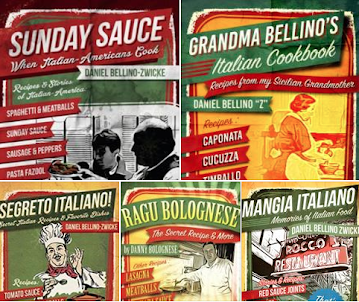
MEMORIES of ITALIAN FOOD
 
DARIO – BISTECA
 
VINO – PORCHETTA
 
And a WHOLE LOT MORE
 
Frome BEST SELLING AUTHOR
 
Daniel Bellino Zwicke

The SOPRANOS

Screenshot 2022-04-15 11.03.12 AM
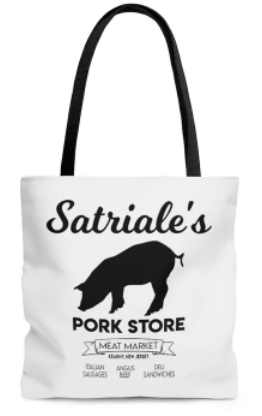
SATRIALE’S
PORK STORE
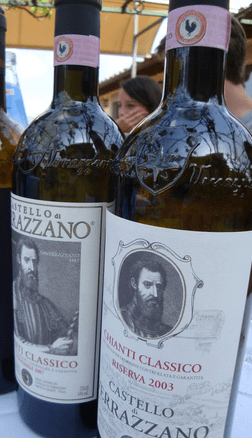
CHIANTI !!!
Screenshot 2022-04-15 11.09.08 AM
Screenshot 2022-04-15 11.03.29 AM
“I LOVE GABAGOOL” !!!


Favorite Italian Food Recipes

 
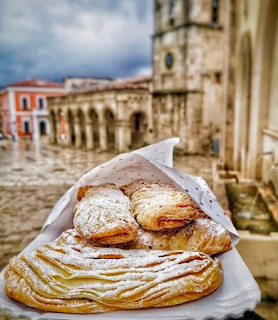
SFUIATELLE
 
The ABRUZZESE Version of SFOGTIATELLE
.
.
 
.
.
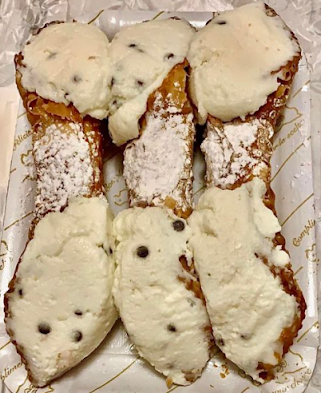
SICILIAN CANNOLI
 
ITALY’S MOST FAMOUS DESSERT
 
“Or is It Tira Mi Su” ???
 
Whatever ???
.
.


CLEMENZA has Got The CANNOLIS
.
.
 
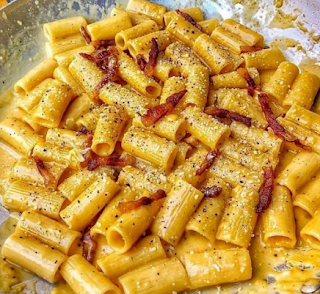
RIGATONI CARBONARA
 
alla ROMANA
.
.
 
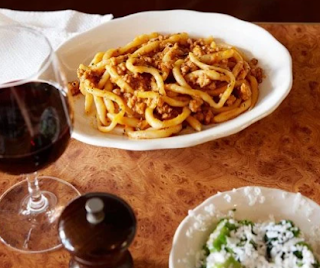
The WORLDS BEST PASTA BOLOGNESE
.
.
 
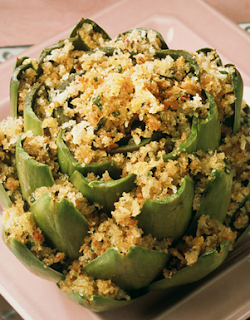
CARCIOFI al FORNO
 
MOMMY’S SICILIAN ARTICHOKE
.
.


FAICCO’S PORK STORE
 
GREENWICH VILLAGE
 
ITALIAN NEW YORK
.
.


“JOLTIN JOE” DiMAGGIO
 
ITALIAN-AMERICAN
 
From  San FRANCISCO, California
.
.


MACCHERONI en NAPOLI
 
Photo Copyright Daniel Bellino Zwicke
 
NAPLES, ITALY
 
2015


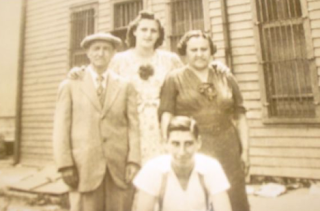
The BELLINO FAMILY
 
Filipo, Lucia, Antonino, Giuseppina
 
LODI, New Jersey
 
Around the Year 1939
 
Missing from Picture, Frank, James, and Lilly


Daniel Bellino with Uncle Frank
“Poco di Vino”
The  SUNDAY SAUCE is Simmering on the Stove
Lodi, New Jersey
2007
.
.
.
.
.
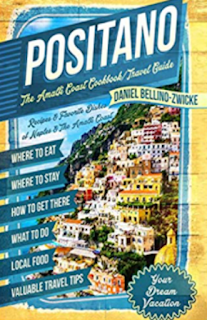
POSITANO The AMALFI COAST
COOKBOOK / TRAVEL GUIDE
.
.
.
.
.
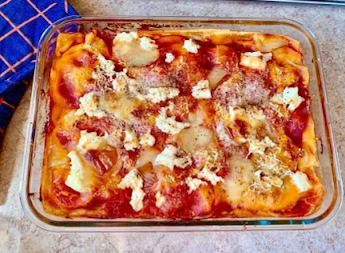
LASAGNA CARNEVALE
With MEATBALLS & SAUSAGE
.
.
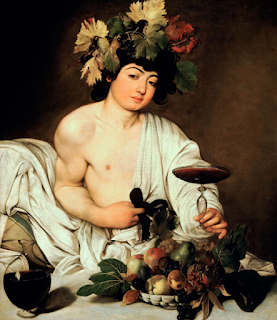
BACCHUS
The ROMAN GOD of WINE
.
.
BEST SELLING 
.
.


Author Daniel Bellino Zwicke
 
 
2015